

Author: nathaliejolivert
Je vis, je meurs
Je vis, je meurs : je me brule et me noye.
J’ay chaut estreme en endurant froidure :
La vie m’est et trop molle et trop dure.
J’ay grans ennuis entremeslez de joye :
Tout à un coup je ris et je larmoye,
Et en plaisir maint grief tourment j’endure :
Mon bien s’en va, et à jamais il dure :
Tout en un coup je seiche et je verdoye.
Ainsi Amour inconstamment me meine :
Et quand je pense avoir plus de douleur,
Sans y penser je me treuve hors de peine.
Puis quand je croy ma joye estre certeine,
Et estre au haut de mon desiré heur,
Il me remet en mon premier malheur.
Louise Labbé, Sonnet VIII, 1555
[Serment des Ancetres] in the Louvre Museum
The picture at the bottom right, is the only one I have found so far of the painting Le Serment des Ancetres exhibited in le Louvre. Laurent Lamothe, current Haitian Chancellor was in France recently and had the opportunity to visit Le Louvre and see the painting. The exhibition “The Museum World” curated by writer J.M. Le-Clezio ends on February 6th. Here is the official link to the exhibition: http://www.louvre.fr/en/expositions/louvre-invites-j-m-g-le-clezio-%E2%80%93-museum-world
This post follows ideas for an exhibition of Le Serment des Ancetres in Le Manoir Alexandra. See older post: Oath of the Ancestors/Serment des Ancêtres

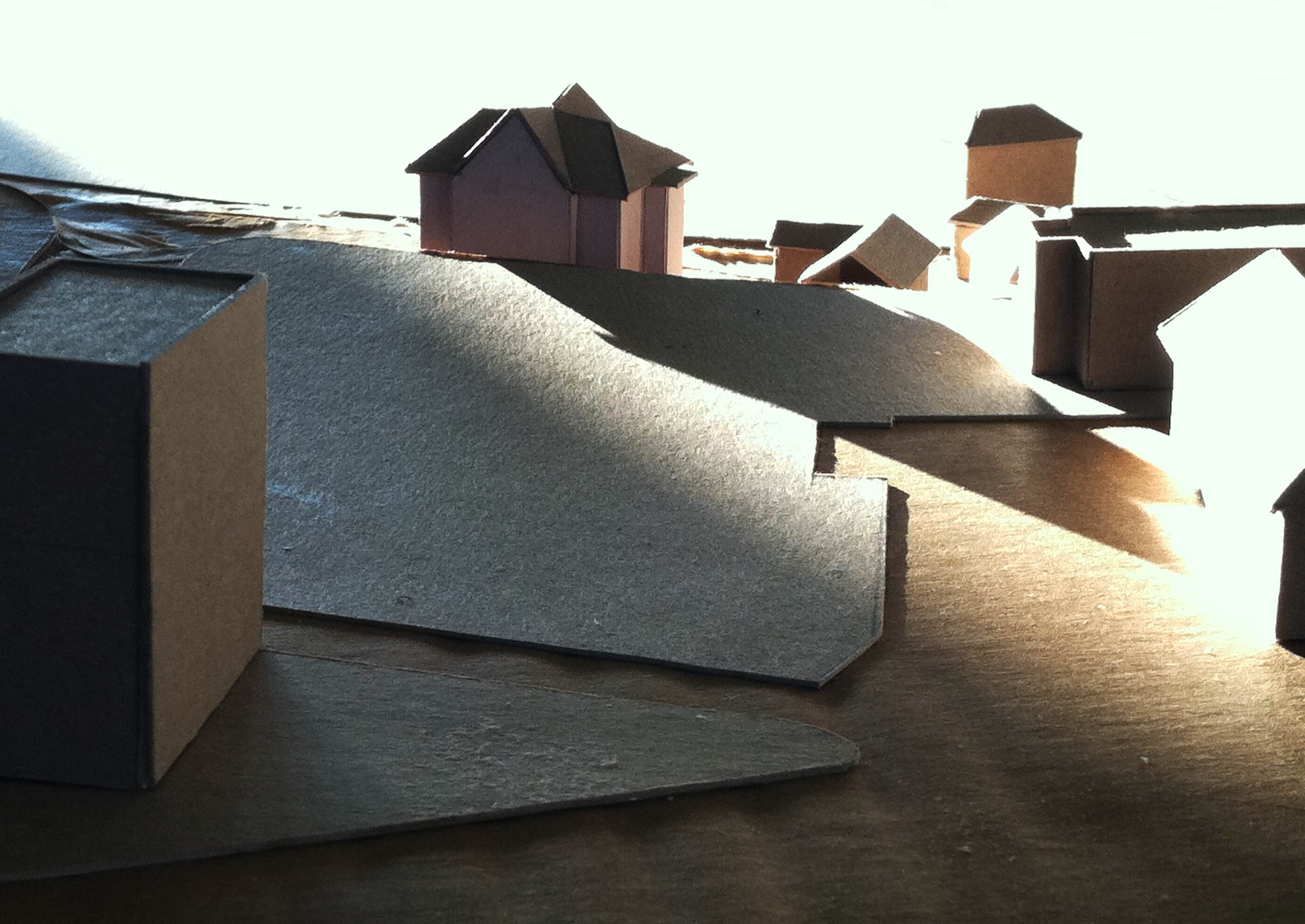
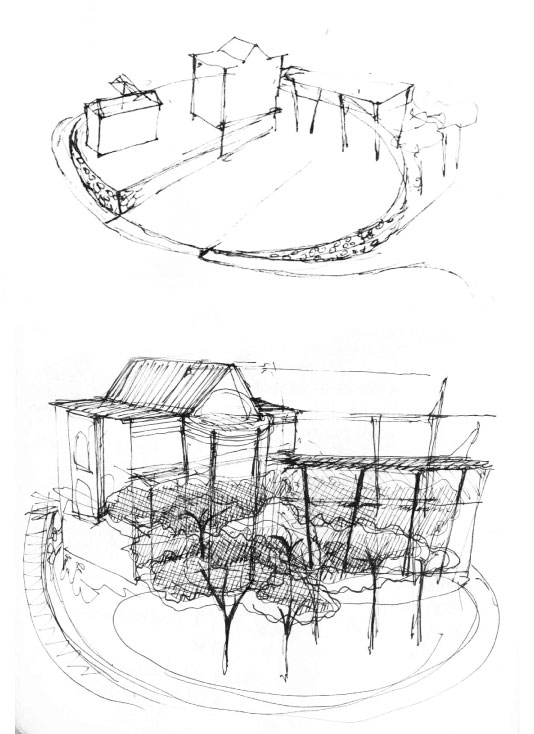
Conceptual Sketches
The meaning of Light and Shadown
Meeting the Light
Garden and Elevated Performance Space
[Precedent Study] Habitation Leclerc
Alleluia pour une femme-jardin / Hallelujah for a garden-woman
Rene Depestre
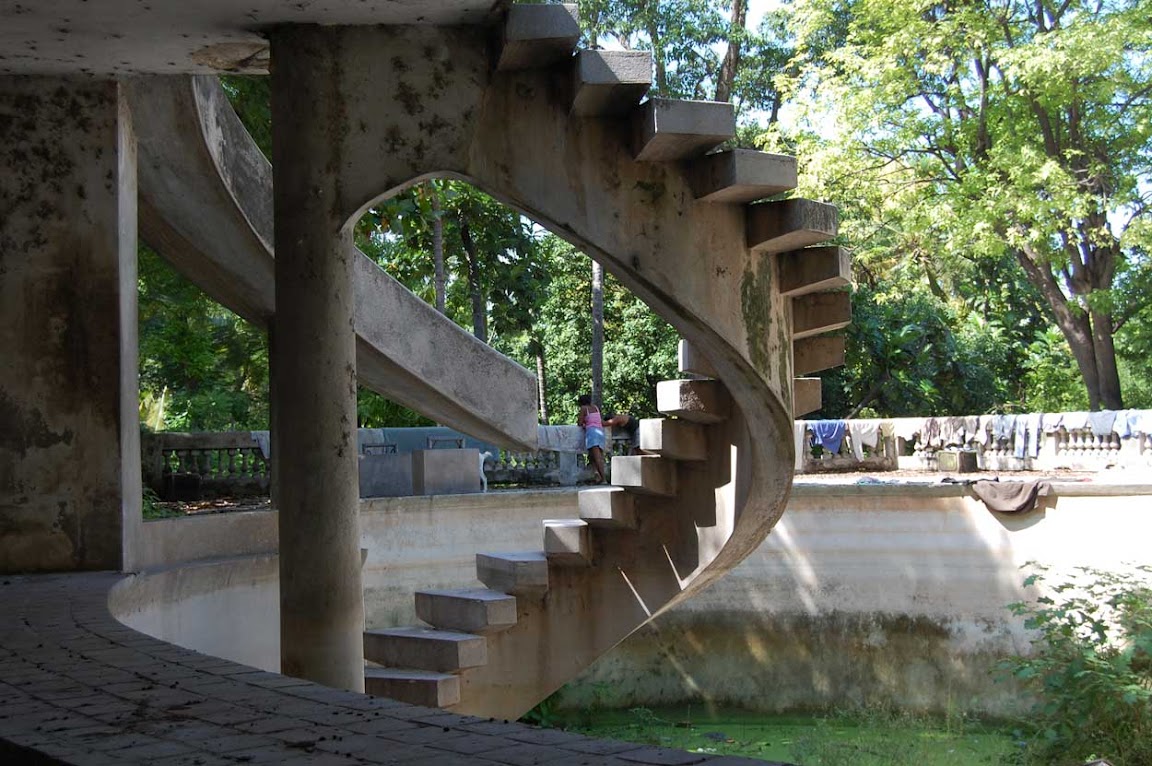
Located in Martissant, a densely populated area in the West Department of Haiti, the Habitation Leclerc is an old abandoned propriety with an expansive garden. It was built during the 19th century for Napoleon Bonaparte’s sister Pauline Bonaparte and husband General Victoire Emmanuel-Leclerc, French governor of Haiti at the time. In 1944, it was bought by the renowned late American dancer Katherine Dunham, who influenced the Alvin Ailey dance school by using Haitian Folklore dance techniques in her career. Dunham transformed Habitation Leclerc into a resort, which attracted many famous people such as Jacqueline Onassis Kennedy and Mick Jagger. When the political situation worsened in Haiti, the propriety’s garden was shut down in 1982. Ever since, it has been difficult to maintain and the beautiful residence has fallen into ruins. The cultural organization called FOKAL bought Habitation Leclerc and is now transforming it into a botanical garden. The first steps of re-appropriating this property consisted in engaging with the people of Martissant and providing a community space to not only understand the needs of the area, but also to mediate conflicts that had risen among different groups.
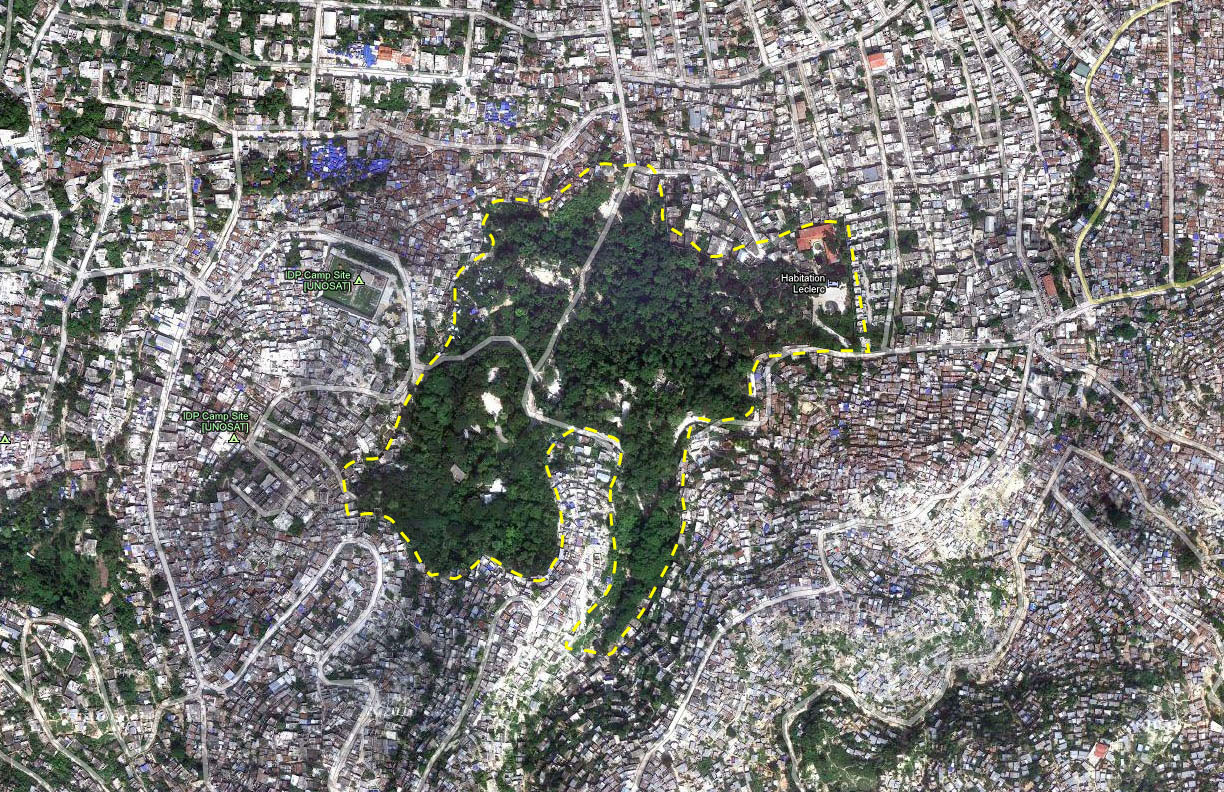
FOKAL has successfully inaugurated the first earthquake memorial park at l’Habitation Leclerc, just this January 12, 2012.
While working with the gardens of Le Manoir Alexandra, I am interested in issues of accessibility. Who gets to use this garden? How welcoming is it? Le Manoir, just like the Habitation Leclerc, once belonged to the aristocracy of Haiti. However its location in the city of Jacmel and its future use as a cultural center calls for social inclusion.
A study of L’Habitation Leclerc will certainly provide some answers to my questions.
It is possibly the most remarkable/sensitive urban project currently being developed in Haiti. Here is a link to an insightful film documentary covering the project.: Martissant, the Dream of a Living
Website on the project: Parc de Martissant

Below, pictures from “Geraldine” on PICASA

Old Maps

By Valgrisi in 1562 (Villa Nueva is Jacmel)

By Phelipau in 1786

By Sorrel in 1799

By Justin Bouzon in 1892
Jacmel, City of Portals
Jacmel is one of the only cities in Haiti that has multiple functioning routes into its historic district. The Ministry of Tourism counts 4 “Portails” or Portals. the Portail Léogane which leads one from Port-au-Prince, the Portail St Cyr which leads to the Jacmel Airport (currently being expanded), the Portail La Gosseline, and the Portail Bainet.
Simultaneously, Jacmel showcases a lot of thresholds. One of my architectural teachers who has visited Jacmel in the early 80s described his experience with entering a place, having to climb a small set of stairs, reach a porch and experience colorful interiors. The frames of the thresholds themselves, are remarkable….
In his book “Jacmel, sa contribution a l’histoire d’Haiti” or Jacmel and its contribution to Haiti’s history, Professor Jean-Élie Gilles, Jacmel native describes the town as a “city of portals”, literally and metaphorically. He aligns his analysis with the city’s ability to attract many foreigners throughout time.

Going On/ Beyond
The “beyond” is neither a new horizon, nor a leaving behind of the past… Beginnings and endings may be the sustaining myths of the middle years; but in the fin de siècle, we find ourselves in the moment of transit where space and time cross to produce complex figures of difference and identity, past and present, inside and outside, inclusion and exclusion. For there is a sense of disorientation, a disturbance of direction, in the ‘beyond’: an exploratory, restless movement caught so well in the French rendition o fthe words au-delà- hear and there, on all sides, fort/da, hither and thither, back and forth.
Location of Culture, Homi K. Bhabha
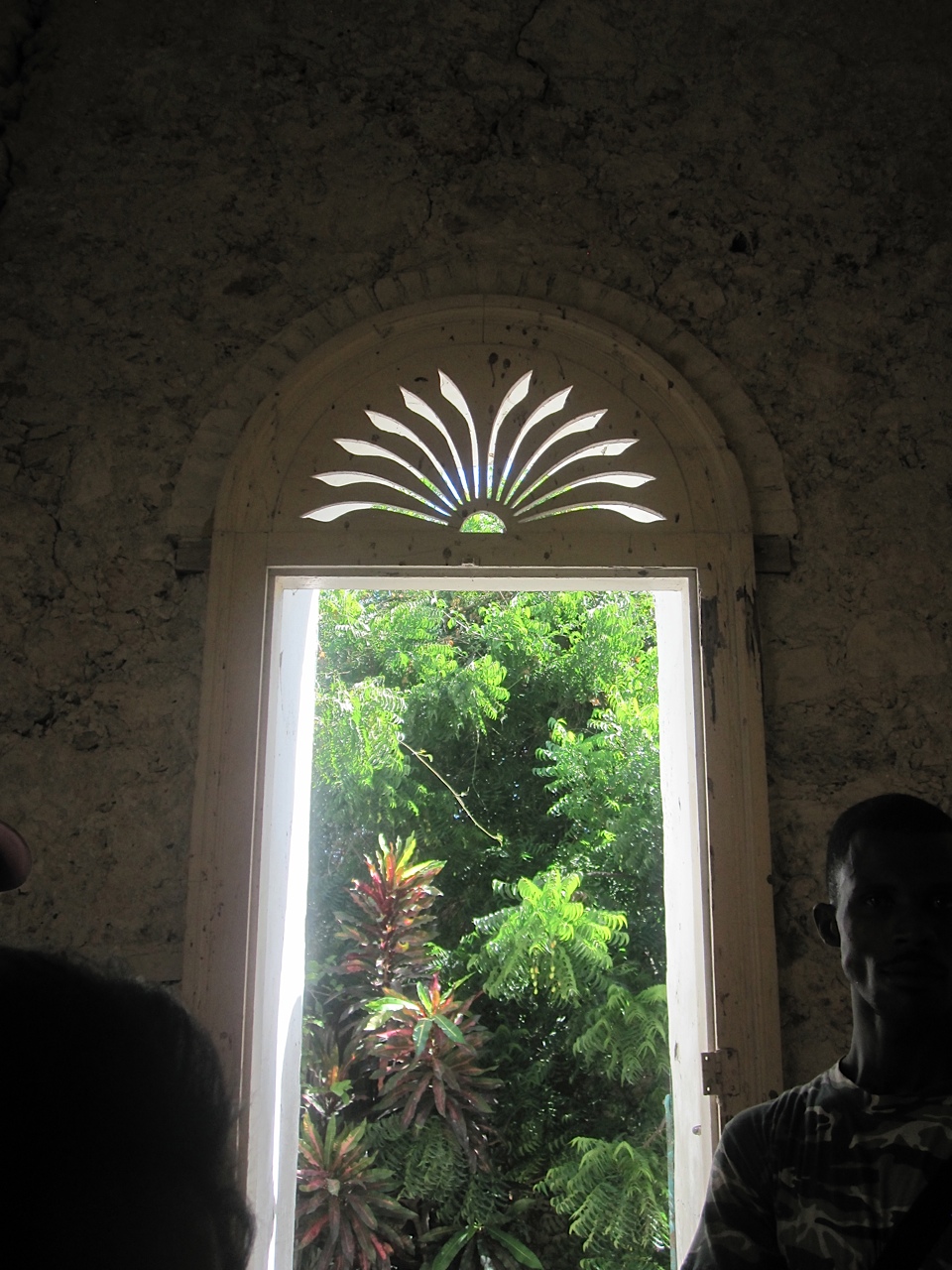
Photo Credit: Catherine Buteau, Manoir Alexandra, November 2011
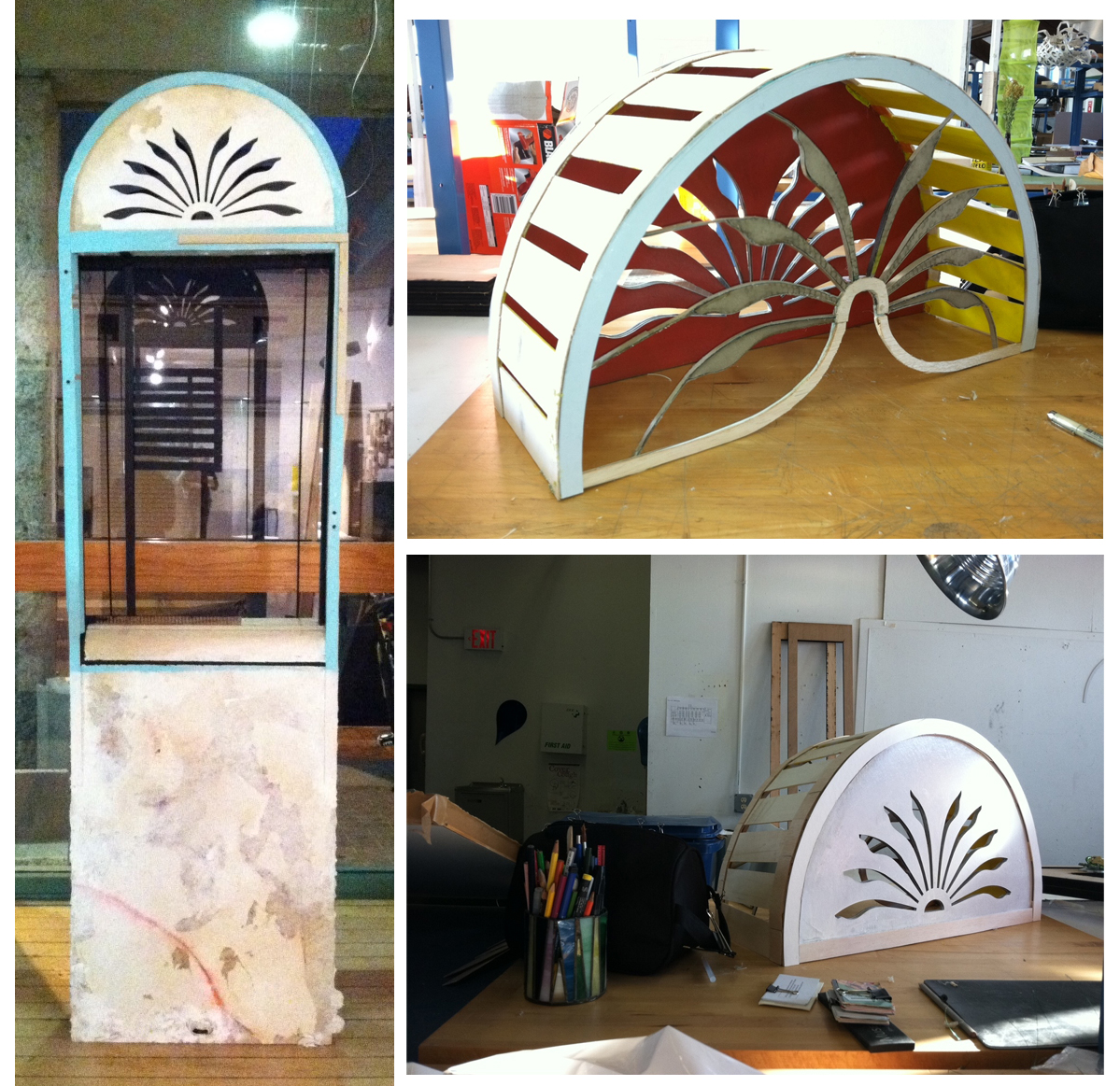
Échantillons architecturaux | Architectural Samples
While strengthening my concept with an architectural intervention, I am gathering architectural elements found in Jacmel, Haiti, and the Caribbean, for inspiration. Below are some of my drawings either depicting those elements as they are, or transforming them for personal use.
I used architecture literally as a reference, using the attic, the boiler room, and the stairwell to make associations between certain binary divisions such as higher and lower and heaven and hell. The stairwell became a liminal space, a pathway between the upper and lower areas, each of which was annotated with plaques referring to blackness and whiteness.
Artist René Green cited in Location of Culture by Homi K. Bhabha

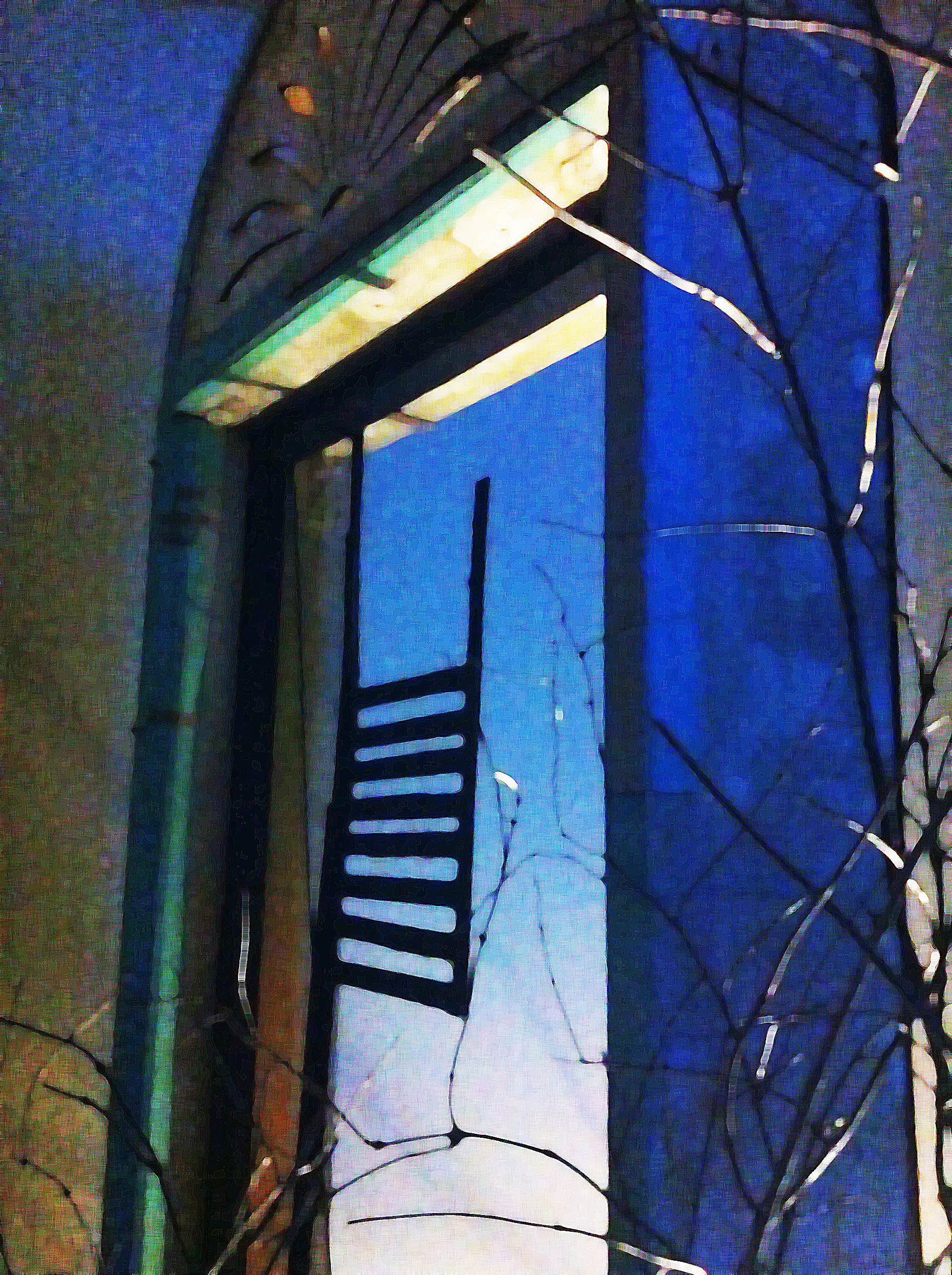
Yaquimo shadows
 Inspiration to a Performance Space
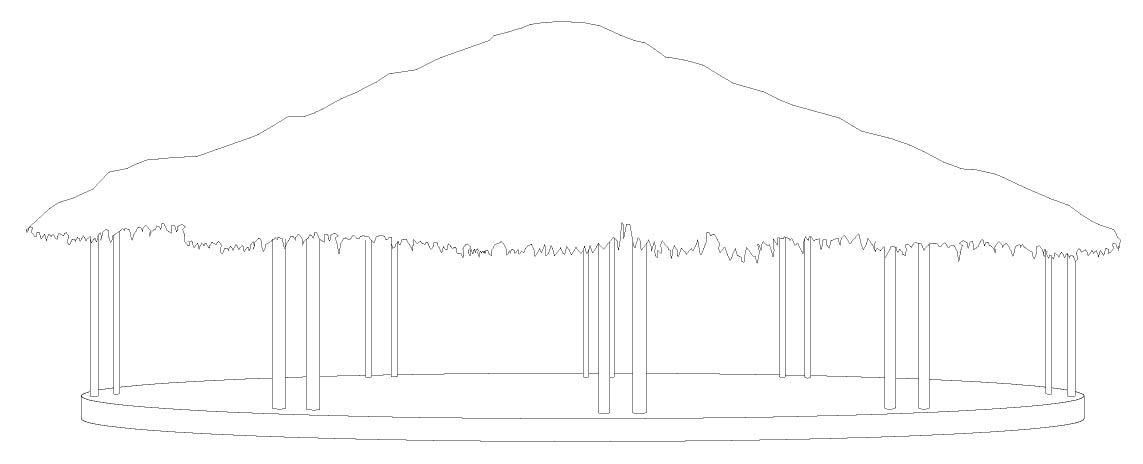
The picture above was taken at Yaquimo Beach (down Grande Rue), during a Salsa dance session. The venue is a two-story tall “Choukoun”, traditional circular Haitian gathering space with a thatched-roof and no walls. The first floor of Yaquimo is a restaurant. The dance lessons took place on the top floor.
As the light bounced back from the neighbors’ wall which showcased a colorful mural, it animated the space… It was great to see the shadows dancing together. There was no city electricity; the only light came from small light-bulbs powered by a generator. There was also no music but the shadows followed a rhythm with the energetic teachers’ instructions. All could make out the song, in their head, with their companion.
Lights Camera Action
This reminds me of an observation one architect made about her stay in Jacmel while working for the construction of a school there. She thought the city looked like the backdrop to a James Bond movie… exotic, tranquil (until something happens), rich, scenic…. It truly does.
While one cares about exhibiting in Jacmel, there is a sense of the action behind the work. The city seems to be constantly producing. It was a treat to visit the school that applies the best to this reality. Ciné Institute, tucked away in a closed down hotel “Indian Rock Hotel” has been functioning since 2006. It started by an initiative of the founders to start a film festival in the city. Film Festival Jakmel.
Today, Ciné Institute plays an important role in bringing people into the city of Jacmel. When I met David Belle, the founder of the school, he mentioned that in 4 days, he already had 4 private jets fly into the city with celebrities such as Adriana Lima (what a coincidence that her name is Adriana) Russel James and Donna Karan.
I have been watching Ciné Institute grow from afar, for a while now, and I was glad to visit the place, meet David Belle and some of the students. They have been working very hard at shining a positive light unto the city, once again demonstrating the impressive sense of progressive civic responsibility the Jacmelians have.

 Le Manoir Alexandra