An attempt at a thesis statement, in which I let René Depestre’s protagonist haunt the ‘constructions of my thoughts’.
In the Caribbean city of Jacmel, the Manoir Alexandra, an early 20th century white-brick building sits in a historic colonial district. On its Northern façade, turquoise wooden-framed windows overlook a barren plaza, while Southern iron-cast balconies offer views of a quiet bay. Layers of chipped paint and missing window panes, illustrate a desolation that has struck the Southern city of Jacmel since the closing of its commercial port in the 1960s. The city’s economic decadence accelerated when a powerful earthquake hit Haiti in 2010, affecting much of the historic district and adding long cracks to the aging structure of the Manoir.
Alexandra looks like an actress whose grandiose years have been left behind in an era of a now lost coffee industry. Her state of disrepair perpetuates the fictional novel that made her famous. Visitors, who learned about her resident zombie bride, Hadriana, look for traces of the young French girl in its decaying walls, mahogany stairs, and spacious rooms. On the inclined balcony, Hadriana combs her hair while looking out towards a lush garden on the Caribbean side. Her story is a threshold into the mystical city of Jacmel. The current generation of Jacmelians is young and unaware of Hadriana’s story which, not only translates a magical language, but also allows an appropriate understanding of the city’s complex social inheritance. In the novel, Hadriana’s disappearance coincides with Jacmel’s actual decadence. Yet it also calls for a reunion between the Haitian population and the international community. René Dépestre has been criticized for idolizing his protagonist and her symbolism in a proud emancipated Black society, yet his novel depicts exactly the complicated relationship between Haiti and the world.
Today, Jacmel is at the forefront of the Haitian government’s efforts towards the redevelopment of tourism in the country. Its historic district has made the 2012 World Monument Heritage Watch List and presents a rich potential as a prototype of cultural preservation and reconstruction, yet it also faces the challenge of pushing against a global tourism economy that favors chain resorts and might render a weak government, even more vulnerable. The Manoir Alexandra, a physical anchor between the upper and lower sides of the city and threshold between the town and the international population, is located at the southern end of a ring of civic buildings, in which important decisions for the city and whole South-East Department are made. While taking into account the legend that has made the Manoir Alexandra important, this thesis will explore how this prime piece of real-estate can mediate a mutually beneficial relationship between the global community and the local inhabitants of Jacmel who have long been renowned for their welcoming habits, their vibrant art scene, progressive philosophies and vivacity in social affairs, despite the many challenges that have crippled Haïti, throughout the years.

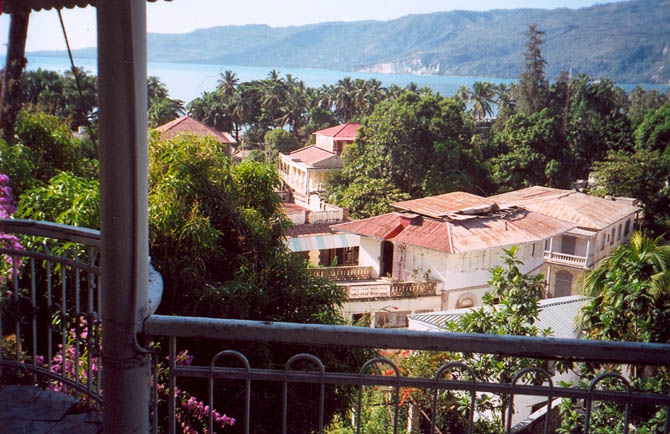
 Le Manoir Alexandra