Hadriana

An attempt at a thesis statement, in which I let René Depestre’s protagonist haunt the ‘constructions of my thoughts’.

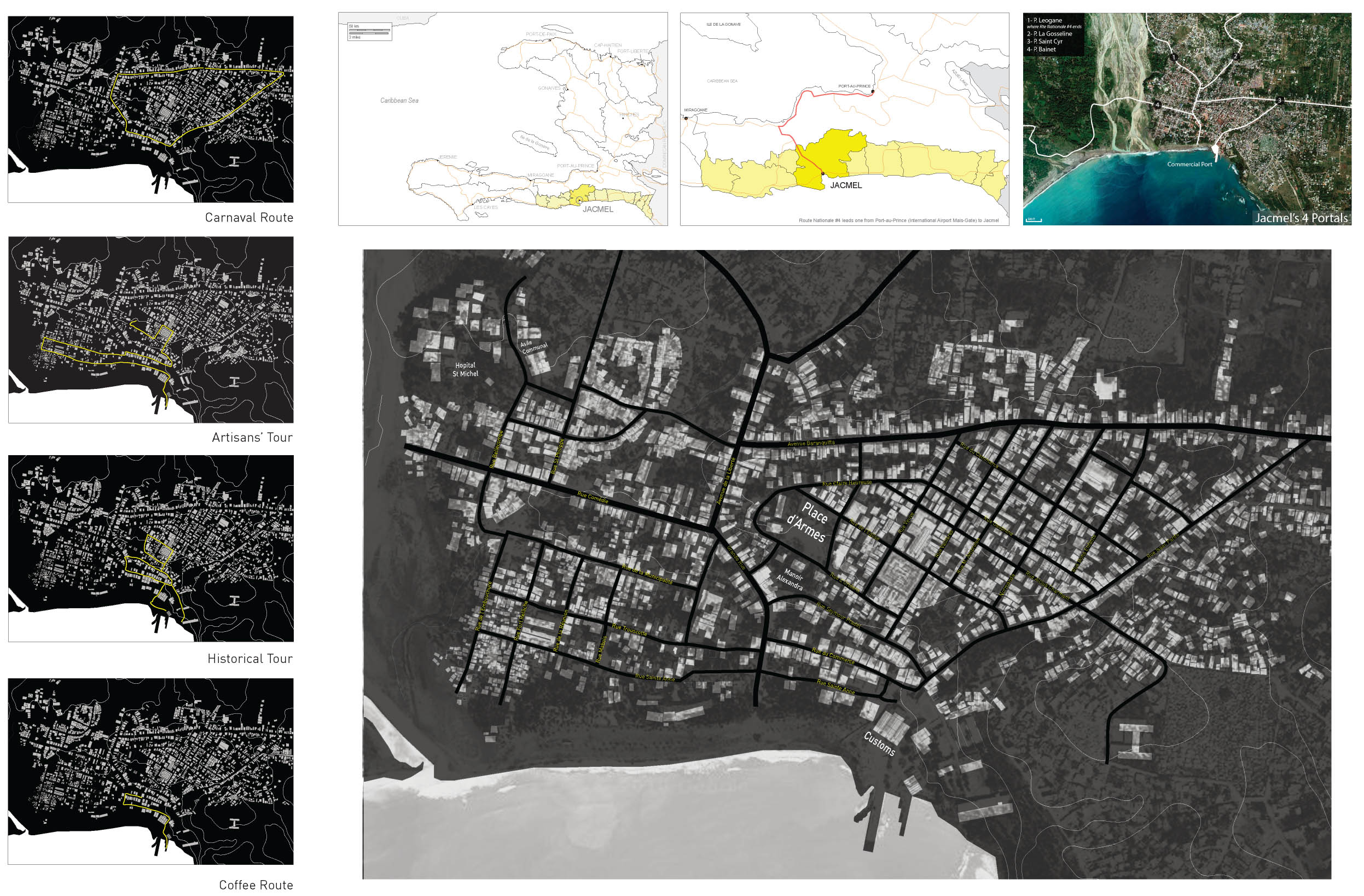
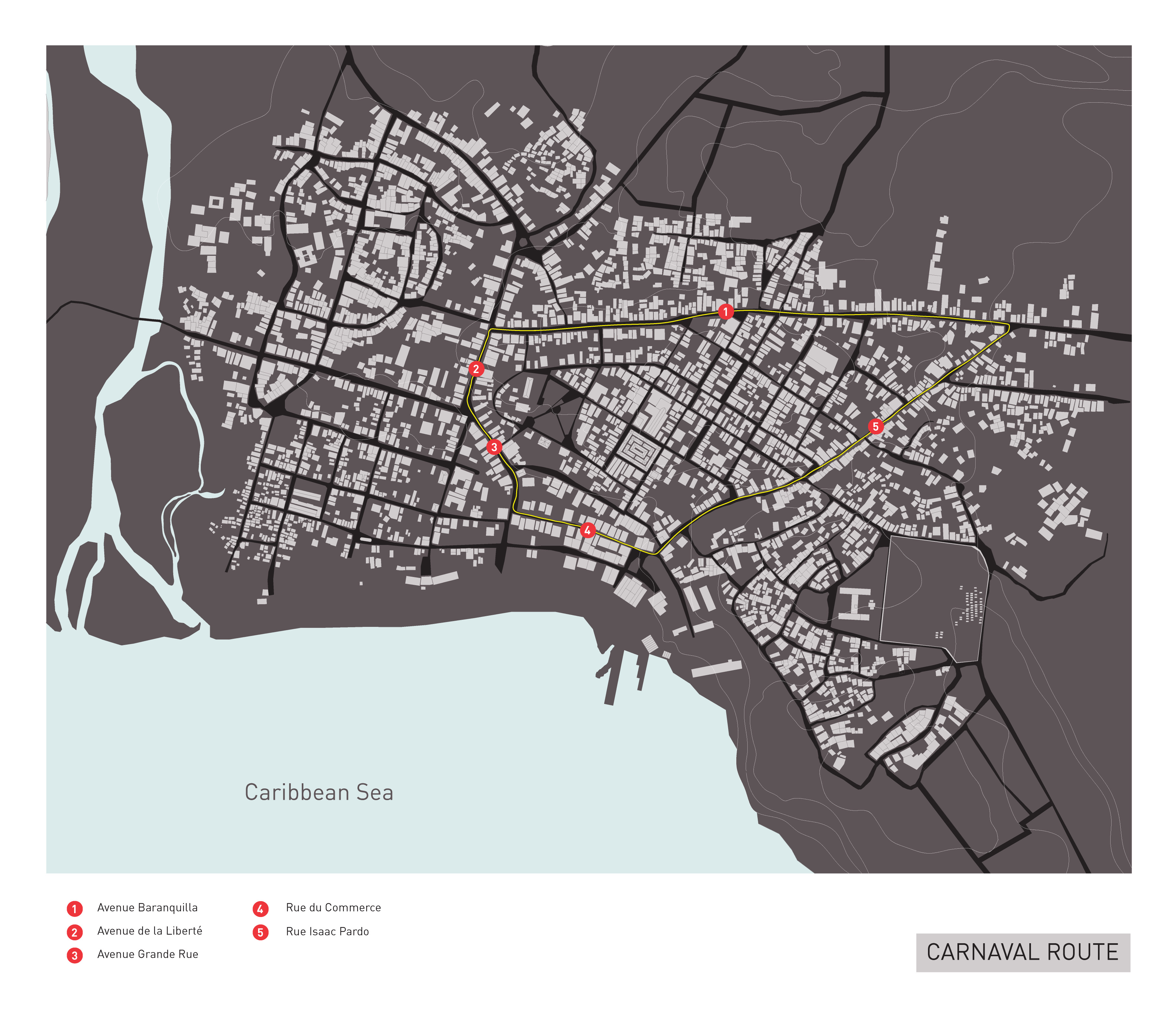
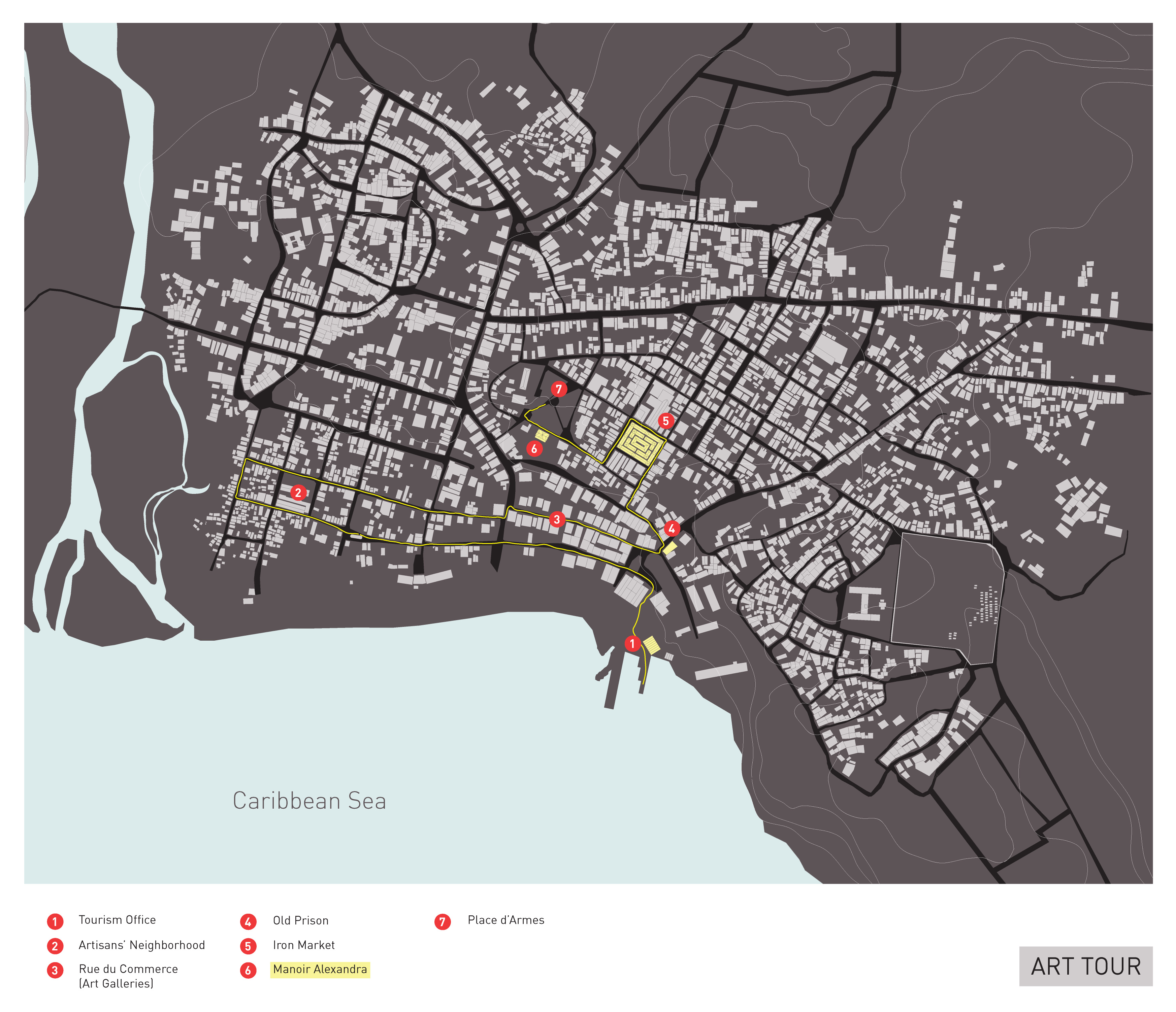
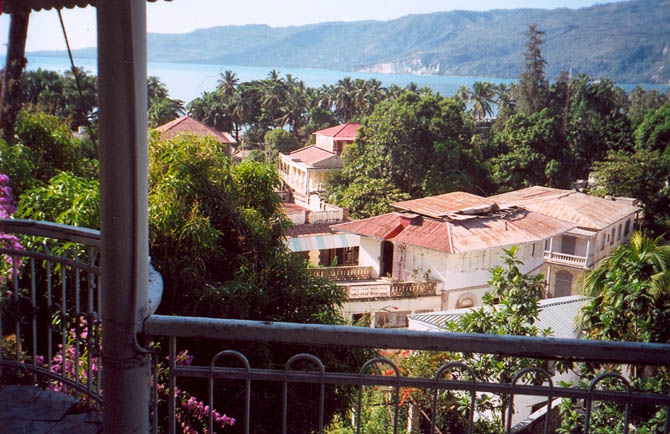
In the Caribbean city of Jacmel, the Manoir Alexandra, an early 20th century white-brick building sits in a historic colonial district. On its Northern façade, turquoise wooden-framed windows overlook a barren plaza, while Southern iron-cast balconies offer views of a quiet bay. Layers of chipped paint and missing window panes, illustrate a desolation that has struck the Southern city of Jacmel since the closing of its commercial port in the 1960s. The city’s economic decadence accelerated when a powerful earthquake hit Haiti in 2010, affecting much of the historic district and adding long cracks to the aging structure of the Manoir.
Alexandra looks like an actress whose grandiose years have been left behind in an era of a now lost coffee industry. Her state of disrepair perpetuates the fictional novel that made her famous. Visitors, who learned about her resident zombie bride, Hadriana, look for traces of the young French girl in its decaying walls, mahogany stairs, and spacious rooms. On the inclined balcony, Hadriana combs her hair while looking out towards a lush garden on the Caribbean side. Her story is a threshold into the mystical city of Jacmel. The current generation of Jacmelians is young and unaware of Hadriana’s story which, not only translates a magical language, but also allows an appropriate understanding of the city’s complex social inheritance. In the novel, Hadriana’s disappearance coincides with Jacmel’s actual decadence. Yet it also calls for a reunion between the Haitian population and the international community. René Dépestre has been criticized for idolizing his protagonist and her symbolism in a proud emancipated Black society, yet his novel depicts exactly the complicated relationship between Haiti and the world.
Today, Jacmel is at the forefront of the Haitian government’s efforts towards the redevelopment of tourism in the country. Its historic district has made the 2012 World Monument Heritage Watch List and presents a rich potential as a prototype of cultural preservation and reconstruction, yet it also faces the challenge of pushing against a global tourism economy that favors chain resorts and might render a weak government, even more vulnerable. The Manoir Alexandra, a physical anchor between the upper and lower sides of the city and threshold between the town and the international population, is located at the southern end of a ring of civic buildings, in which important decisions for the city and whole South-East Department are made. While taking into account the legend that has made the Manoir Alexandra important, this thesis will explore how this prime piece of real-estate can mediate a mutually beneficial relationship between the global community and the local inhabitants of Jacmel who have long been renowned for their welcoming habits, their vibrant art scene, progressive philosophies and vivacity in social affairs, despite the many challenges that have crippled Haïti, throughout the years.

How far are we from Yesterday?

“How Far are we from Yesterday?” Martha Marcy Lay Marlene (Movie 2011)

“Every passion borders on the chaotic, but the collector’s passion borders on the chaos of memories”.

“…ownership is the most intimate relationship that one can have to objects. Not that they come alive in him; it is he who lives in them. So I have erected one of his dwellings, with books as the building stones, before you, and now he is going to disappear inside, as is only fitting”.

Unpacking My Library | Walter Benjamin

No sooner had the warm liquid mixed with the crumbs touched my palate than a shudder ran through me and I stopped, intent upon the extraordinary thing that was happening to me. An exquisite pleasure had invaded my senses, something isolated, detached, with no suggestion of its origin. And at once the vicissitudes of life had become indifferent to me, its disasters innocuous, its brevity illusory – this new sensation having had on me the effect which love has of filling me with a precious essence; or rather this essence was not in me it was me… Whence did it come? What did it mean? How could I seize and apprehend it? … And suddenly the memory revealed itself. The taste was that of the little piece of madeline which on Sunday mornings at Combray (because on those mornings I did not go out before mass), when I went to say good morning to her in her bedroom, my aunt Léonie used to give me, dippint it first in her own cup of tea or tisane. The sight of the little madeleine had recalled nothing to my mind before I tasted it. And all from my cup of tea.”

A la Recherche du Temps Perdu | Marcel Proust

“the work of art can recapture the lost and thus save it from destruction, at least in our mind. Art triumphs over the destructive power of time”

Wikipedia on Marcel Proust’s “A la recherche du temps perdu”

Spatially Yours

I took advantage of the break to edge my way into the crowd. The carnival bands had completely taken over every meter of the square. As had previously been announced, the most renowned ones from the South East were there. The musicians and dancers seemed to be camped out for the moment amidst their sleeping instruments; different types of drums, bamboo horns, conch shells, rattles, saxophones, flutes, cones, accordiaons. Here adn there, under the trees, while eating and drinking, the Jacmelians began to tell stories.

Hadriana dans tous mes rêves | René Depestre

The Architecture of Participation

Concerned with the lack of governance and citizen participation in Haiti, and having experienced the same issue in the US by attempting to work in various voluntary groups, it has always interested me to create spaces that would encourage civic participation.

The “Architecture of Participation” is currently used to describe the way in which people are connected via the 2.0 network. At first, my research consisted in building a website for people to share their experiences, in different places of Haiti and provide their views on how  they think they could improve those places.

A friend of mine listed my school projects to help me find the usual focus of my work. With this exercise, we found out that my work promotes little physical intervention. It deals with bringing people together with subtle urban and landscape schemes, or with a flexibility of space, with porosity and playfulness of space.

What has sparked my interest is the use of technology to create meeting places, with little physical/material intervention. Technology has helped generate many pop-up demonstrations and has been used to bring people together to either fight against a system or for pure fun. For example the ‘Dinner in White’ is an event, started in Paris, that brought people together for a large picnic in an undisclosed public place. The only requirement is to sign up for the event and wait for the location, the picnic day. Inspired by this spontaneity of wanting to commune, my interest to bring people together for meetings in a transparent, flexible space, have led me to a space of congregation, generator of ideas and platform for cross-cultural exchange.

“Hadriana in Jacmel’s Dreams”- in After the Dance by Edwidge Danticat

Jacmel’s Resident Goddess is Hadriana Siloe. One of the most beautiful women in town, Hadriana dies at the altar in the middle of her wedding ceremony. Her body is exposed at the square for a public wake before her funeral. Except she is not dead. It only apears so. Her apparent demise was caused by a man with mystical powers who whows himself as a giant butterfly. Hadriana becomes a zombie.

A few hours after her burial, Hadriana is exhumed from her grave but manages to escape, running off to the mountains, wher she is mistaken for Simbi Lasous, the spirit of springs and fresh waters, and is invited to accompany a group of migrants off to permanent exile in Jamaica:

This is the premise of René Depestre’s  Hadriana dans tous mes rêves (Hadriana in All My Dreams), a celebrated novel set in Jacmel. Born in Jacmel in 1926, the poet-novelist Depestre is one of Haiti’s most prolific and best-known writers. The winner of several prestigious international prizes, he is considered by some to be Haiti’s best shot at a Nobel Prize. Even though he has been living outside of Haiti for more than forty years and has never returned, Depestre draws upon childhood memories of the 1938 carnival season for his 1988 novel, and in it he has created a character that lives far beyond the pages of his book.

Hadriana is one of those rare literary cases in which a novel’s character becomes even more real, and more powerful, than actual people. For many Jacmelians, including Divers, even powering her existence parallels the question that many agnostics ask themselves about God. Did we create God or did God create us? Did Dépestre and Jacmel create Hadriana or did she create Jacmel and Dépestre?

Edwidge Danticat

A potent cocktail of palm trees, poets … and peace

Picture Source: Wikipedia

Tracy Chevalier, author of world-acclaimed “Girl with a Pearl Earring” discovered paradise while sipping rum on her hotel verandah. An Article on TheIndependent.co.uk: A Potent Cocktail of Palm Trees, Poets… and Peace

Donation of $50,000 from Azerbaijan to Jacmel

From Haiti-Libre:


Upon the initiative of First Lady of Azerbaijan, Mehriban Aliyeva, of the UNESCO Good-Will Ambassador Mehriban Aliyeva, Azerbaijan will assign $50,000 to the efforts to restore cultural facilities of the city of Jacmel.

The project is to start this December and last six months.

Read More: http://www.haitilibre.com/en/news-4152-haiti-culture-donation-of-$50-000-from-azerbaijan-to-jacmel.html

Narrative Flows

Oral Histories.

The challenge in trying to decipher the truth in oral histories reminds me of an Indian literature class I took at RISD during my Sophomore year. It was called “Narrative Flows” and it explored literary pieces that dealt with the importance of water in Calcutta- through stories of different families, social classes, religious groups, caste systems, etc…

The class attempted to expose the various local voices in Calcutta. For the first time, I learned about the concept of “The Other” and one’s position in the world, when hailing from a developing country.

Since my goal with this project is to tell a story, perhaps a fluid approach is appropriate… and ideal. The truth in “Narrative Flows” might prove more valid than the Westerner’s written words on “The Other”s history.

Simultaneously, Jacmel has always been open to the world. It might also be fitting to welcome (compare & contrast) different views and interpretations of the history of this vibrant town. It does become very colorful and stimulating to learn and write about the different views.